BUYER DEEP DIVE · EV & HYBRID Tesla
Tesla
TeslaTesla Model Y: efficient family EV, volatile ownership equation
Space and energy efficiency are strong. Insurance, repair access, tires and depreciation can move the five-year result far more than expected.
HC GRID SCORE8.1/10
WHAT WORKS
- Strong efficiency and useful cargo
- Convenient charging ecosystem for many routes
- Practical family-size footprint
WHAT TO WATCH
- Insurance and collision repair need careful local quotes
- Depreciation can be unpredictable
- Tire wear and service access vary by use and location
THE VERDICT
The Model Y can be an excellent daily tool when charging is easy and the insurance/repair ecosystem works locally. Its low energy cost should never be used as a shortcut for total cost.
The easy part: daily energy
Home charging and an efficient drivetrain can make the recurring energy calculation attractive. That advantage grows with mileage, especially when household electricity rates are favorable.
The hard part: risk costs
Insurance, collision downtime, parts, tire wear and future value can dominate the result. Collect local quotes and use a conservative resale assumption rather than treating today's market as permanent.
Family utility without a fuel bill
The cargo and passenger package makes the vehicle useful beyond commuting. That helps the value case if it replaces a less-efficient family crossover rather than adding another financed vehicle to the household.
What the household budget says
Our baseline uses 12,000 miles a year and separates energy, maintenance and wider ownership risk. It is a planning model, not a dealer, insurer or repair quote.
Fuel / energy$600modeled annual
Maintenance reserve$840modeled annual
Total range$8,640–$12,24012K-mile planning range
High-mileage households with dependable charging, good local service access and a plan to absorb resale-value changes.
Open the full ownership-cost profile →CRASHWORTHINESS · RECALLS · STRUCTURE
Safety should be compared by exact year and trim.
NHTSA stars below are loaded from the official 5-Star Safety Ratings API. At most the first three tested variants are shown in NHTSA order. IIHS uses a separate crashworthiness and crash-avoidance test program.
Loading official NHTSA tests and recalls…
Star ratings apply only to the shown model year and tested variant. They cannot be transferred automatically to another year, trim, body style or build date. Recall count is model-level; use the VIN lookup to see whether a specific vehicle has an unrepaired recall.
More expert cost reviews
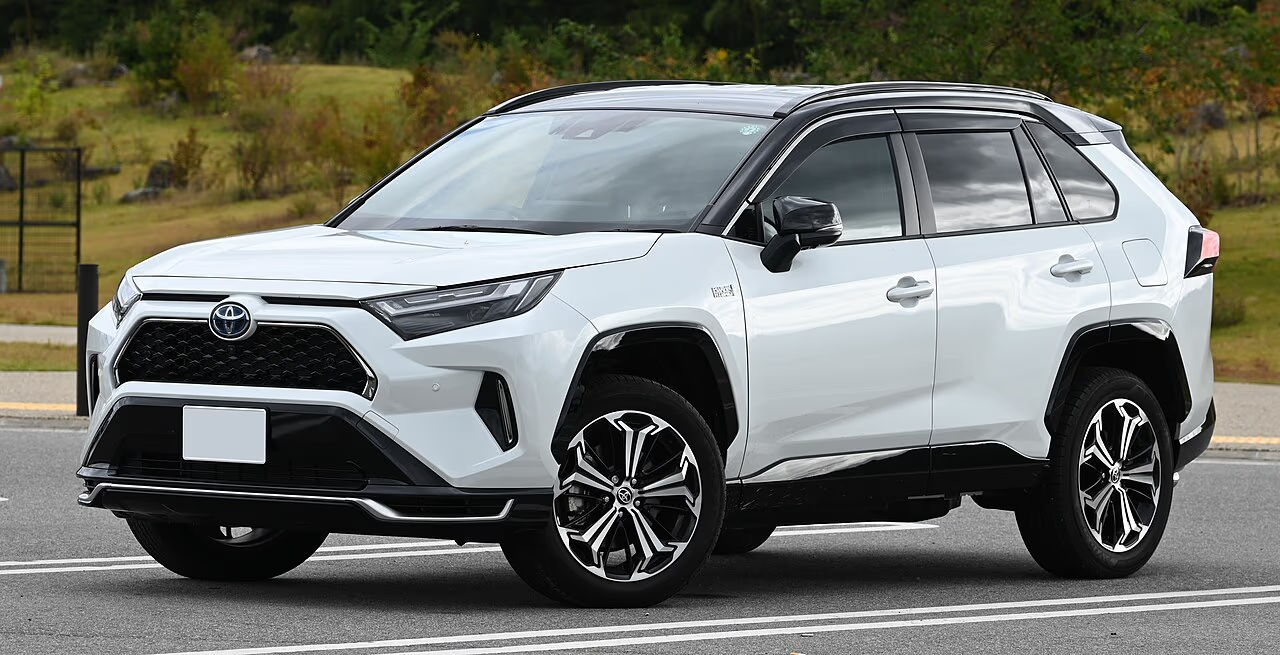
 Toyota
Toyota RAV4 Hybrid: the family default, tested against the whole budget
8.8/10 · Read →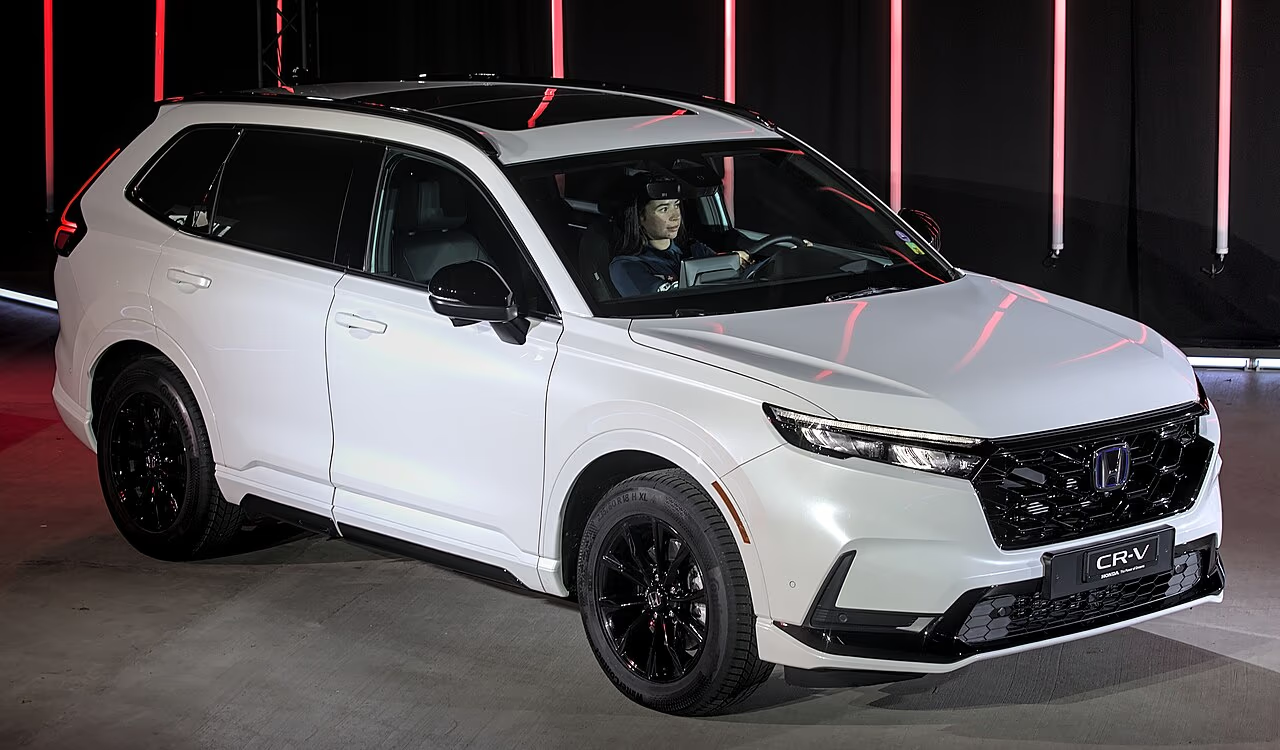
 Honda
HondaHonda CR-V Hybrid: is practical space worth the step-up price?
8.6/10 · Read → Toyota