LONG-TERM COST · CITY Toyota
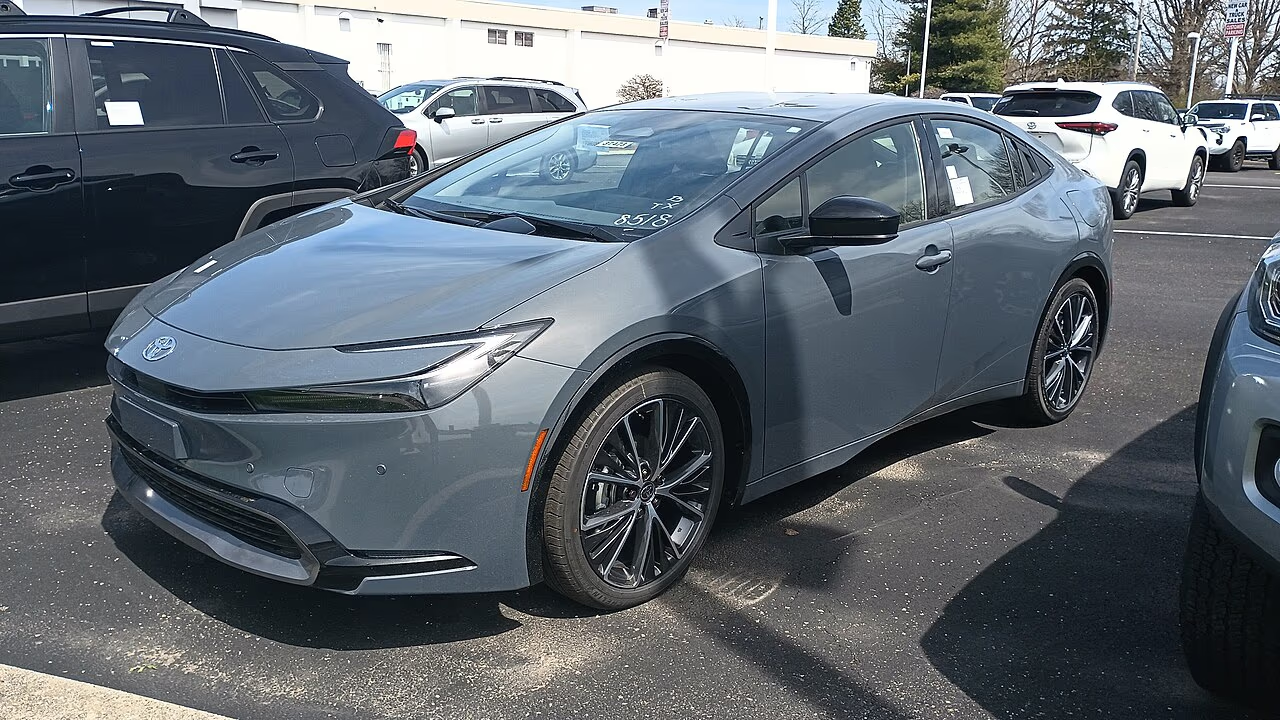
ToyotaToyota Prius: the high-mileage city answer with one important caveat
Efficiency remains the headline, but cargo, insurance, tire size and where you park decide whether the complete package works.
HC GRID SCORE8.7/10
WHAT WORKS
- Excellent modeled fuel economy
- Hatchback utility in a compact footprint
- Strong fit for frequent urban and suburban mileage
WHAT TO WATCH
- Low seating position will not suit everyone
- Rear visibility and rear-seat space need an in-person check
- Street parking can alter insurance and cosmetic-repair risk
THE VERDICT
The Prius is one of the clearest efficiency-led choices in this library. It makes the most sense for drivers who cover enough miles to benefit and do not need SUV clearance or a tall cargo box.
Why the shape matters
A compact footprint helps with parking while the hatch gives the car more household usefulness than a traditional trunk. That combination is the Prius’s quiet advantage.
The mileage break-even question
More annual miles make fuel efficiency more valuable. Low-mileage drivers should compare the purchase price and insurance difference carefully; saving at the pump may take longer to offset a higher upfront deal.
Parking belongs in the car budget
Garage rent, residential permits, street-damage exposure and theft risk can overwhelm small fuel-cost differences. In dense cities, the right car decision starts with where the car sleeps.
What the household budget says
Our baseline uses 12,000 miles a year and separates energy, maintenance and wider ownership risk. It is a planning model, not a dealer, insurer or repair quote.
Fuel / energy$831modeled annual
Maintenance reserve$1,176modeled annual
Total range$7,007–$9,00712K-mile planning range
Apartment and city households with regular mileage, limited parking space and no need for rural-road clearance.
Open the full ownership-cost profile →CRASHWORTHINESS · RECALLS · STRUCTURE
Safety should be compared by exact year and trim.
NHTSA stars below are loaded from the official 5-Star Safety Ratings API. At most the first three tested variants are shown in NHTSA order. IIHS uses a separate crashworthiness and crash-avoidance test program.
Loading official NHTSA tests and recalls…
Star ratings apply only to the shown model year and tested variant. They cannot be transferred automatically to another year, trim, body style or build date. Recall count is model-level; use the VIN lookup to see whether a specific vehicle has an unrepaired recall.
More expert cost reviews
 Toyota
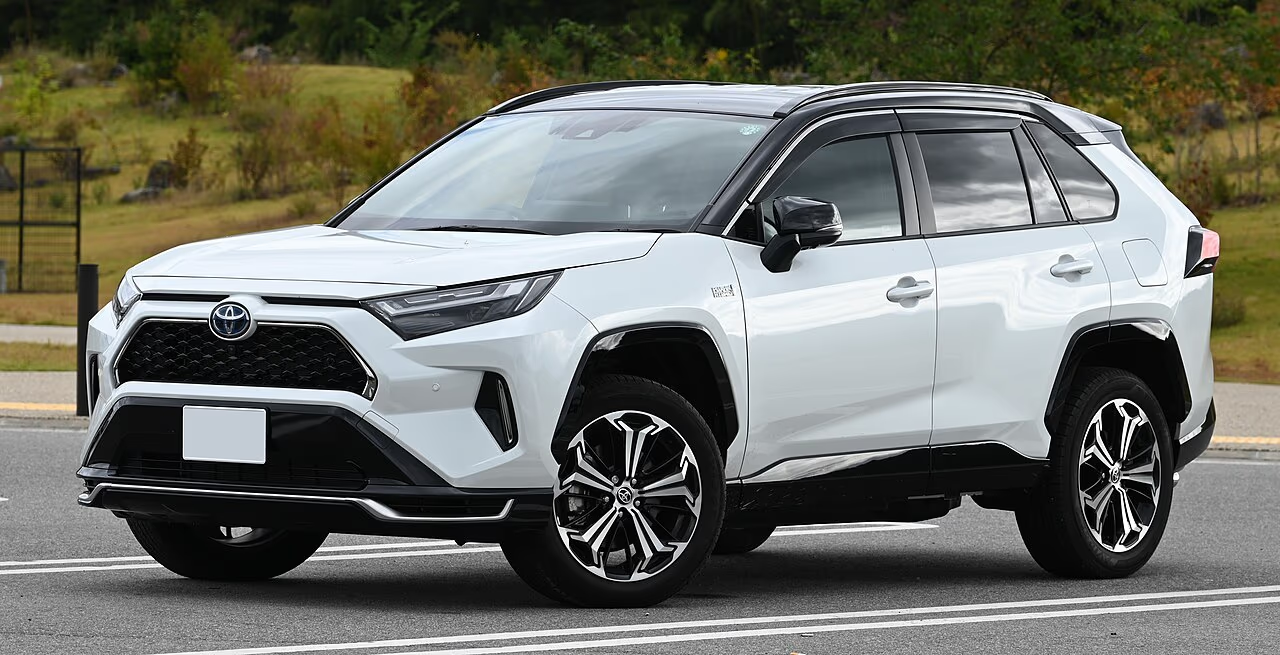
Toyota RAV4 Hybrid: the family default, tested against the whole budget
8.8/10 · Read →
 Honda
HondaHonda CR-V Hybrid: is practical space worth the step-up price?
8.6/10 · Read →
 Ford
Ford