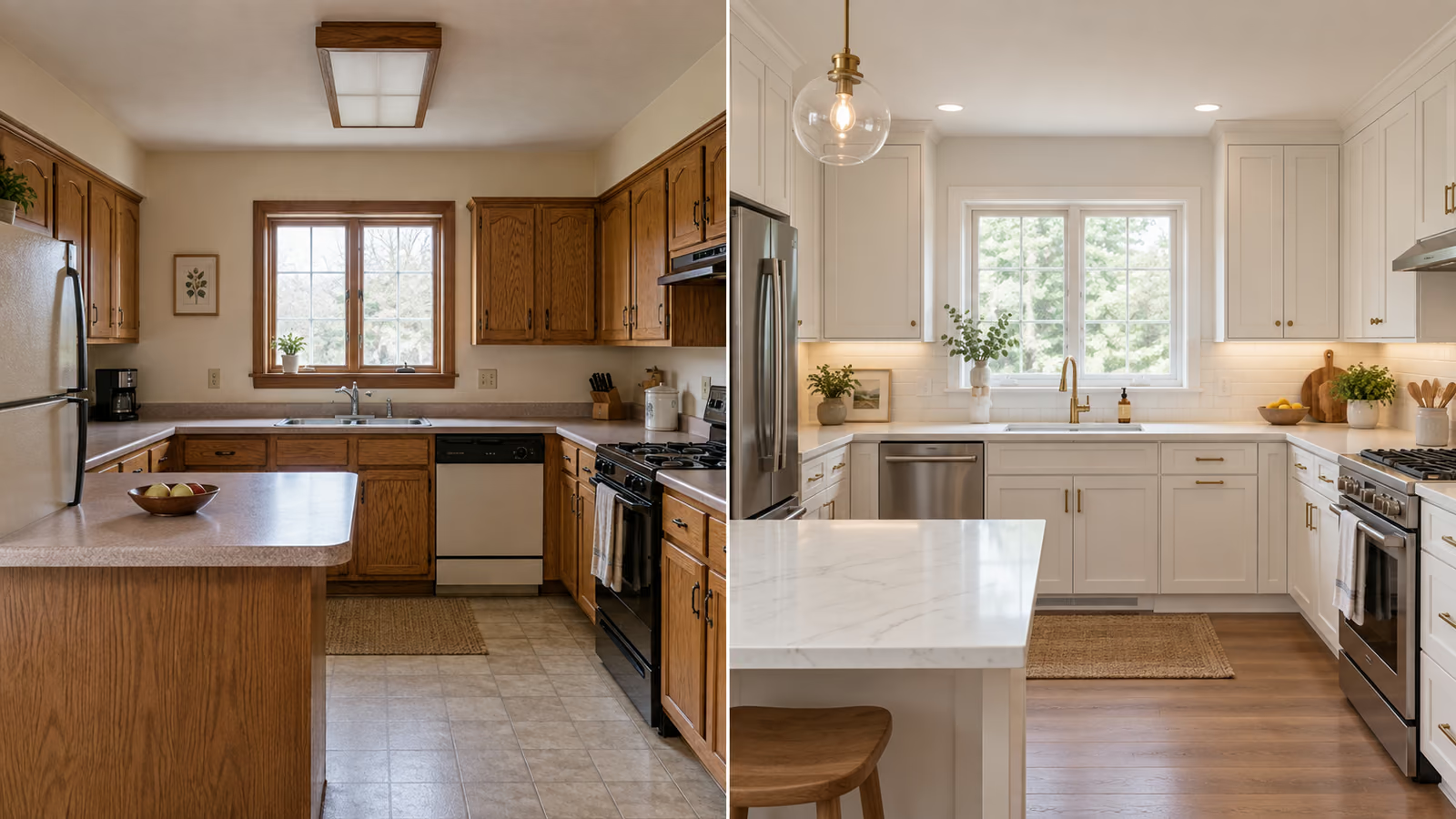
Rebuild the advertised price around the exact home: base plan, elevation, homesite or lot premium, required structural options, design selections, change fees, deposits and items still missing at delivery. Get the included-features sheet and option ledger in writing. Then add financing, completed-home taxes, insurance, HOA, utilities and post-closing setup. A model home, rendering or starting price is not the final scope.
Finding the price of the actual home rather than the advertised entry point
Separating signed upgrades from allowances, wish-list items and later changes
Planning appliances, window coverings, landscaping, fencing and other day-one gaps
This is a transaction-document checklist, not a claim about a standard national builder package. HomeCostGrid does not supply builder-specific option prices; copy current amounts from the exact availability sheet, option ledger and signed contract addenda.
Tie the base price to one plan and one homesite
Ask which elevation, square footage, included finish level and lot the advertised base price describes. Then request the current availability sheet for homes that can actually be contracted. A community's least expensive theoretical combination may not be available on the buyer's timeline.
Record the plan, elevation, lot number, orientation, completion stage and target closing period. Do not blend the price of a to-be-built home with an inventory home that already contains selected options.
- Name the exact lot
- Save the dated availability sheet
- Separate to-be-built from inventory homes
A lot premium buys a site, not a guaranteed return
Builders may charge different premiums for lot size, location, view, privacy, grade or proximity to amenities. Ask what physical attribute supports the amount and whether any easement, drainage feature, retaining structure, future phase, road or common area affects the site.
Do not assume the appraisal or future buyer will value the premium dollar for dollar. Walk the lot, review the recorded documents and plans available to you, and keep the premium as its own decision line.
Separate required structural choices from optional finishes
Some choices must be made early because they affect framing, electrical, plumbing or mechanical work. Others are design-center finishes that can be selected later or changed after closing. Ask which items are required by the plan, lot, code, lender or builder package and which are genuinely optional.
For every selection, record the base allowance or included specification, the upgrade amount, tax or fee treatment, deposit due, cancellation rule and deadline. A package discount is useful only when the household values the included items.
The model home is evidence of possibility, not inclusion
Model homes can include premium flooring, cabinets, lighting, built-ins, window treatments, landscaping, technology, furniture and nonstandard structural changes. Ask for a room-by-room model-option list and compare it with the specification for the home being purchased.
Photographs and renderings can help identify questions but do not override the contract. Verify brand, model, quantity, color, dimensions and installation responsibility for any item that matters to the decision.
Price what the keys do not include
A new home may still need a refrigerator, washer and dryer, blinds, closet systems, gutters, fencing, irrigation, landscaping, mailbox, storage or upgraded lighting. The exact list varies by builder and location; there is no safe national included-items assumption.
Build a separate post-closing setup list with timing and cash source. Keep it outside the mortgage comparison so a generous lender credit does not make unfinished household needs disappear.
Finish with taxes, HOA, warranty and independent checks
Ask how property tax is estimated after the completed home is assessed, when HOA dues begin, whether there are initiation or transfer charges, and which utilities or special districts bill separately. Get an address-specific insurance quote rather than relying on a sales estimate.
FTC guidance explains that a builder warranty is a contract with its own coverage, exclusions, procedures and time limits. Separately, CFPB recommends arranging an independent home inspection as soon as possible because an inspection assesses the home's physical condition and differs from an appraisal. Read the purchase contract and warranty, then keep separate cash planning for items they do not cover. HomeCostGrid action: copy the final option ledger into the Builder Incentive Normalizer, then carry the completed price into True Home Cost and the first-year cash plan.
Make the advertised home and contracted home match.
Use dated builder documents for the exact plan and lot. Mark every item as included, required, optional, deferred or still unknown.
- 01Save the exact plan, elevation and square footage
- 02Identify the lot and written lot premium
- 03Request the included-features specification
- 04Separate required structural options
- 05Record every design-center selection and deadline
- 06Ask for the model-home option list
- 07List appliances and exterior work left after delivery
- 08Confirm deposits, change fees and cancellation terms
- 09Verify completed-home tax, HOA and insurance inputs
- 10Read the builder warranty and inspection rights
A few things worth knowing before you start.
What does a new-home base price usually include?
There is no universal package. The builder's dated specification and signed contract for the exact plan, elevation and lot control what is included. Request both before relying on the advertised number.
Is a lot premium part of the home price?
It is generally an added contract amount for the selected homesite. How it affects financing, appraisal, taxes or resale depends on the transaction and market; do not assume a dollar-for-dollar return.
Are design-center upgrades included in the mortgage?
They may be included in the contract price when selected and approved in time, but lender, appraisal, deposit and builder rules vary. Confirm the treatment before making a nonrefundable selection.
Does a builder warranty mean I can skip an inspection?
No. A warranty has defined coverage, exclusions, procedures and deadlines. Inspection rights and timing depend on the contract and local rules; buyers should obtain qualified advice for the specific home.
Check the original guidance.
- Federal Trade Commission — Warranties for new homes↗
- Consumer Financial Protection Bureau — Prepare and set a home-price budget↗
- Consumer Financial Protection Bureau — Schedule an independent home inspection↗
Sources provide the current national or program context reviewed on the date above. Contracts, loan terms, prices, eligibility, codes and property conditions still require transaction-specific verification.