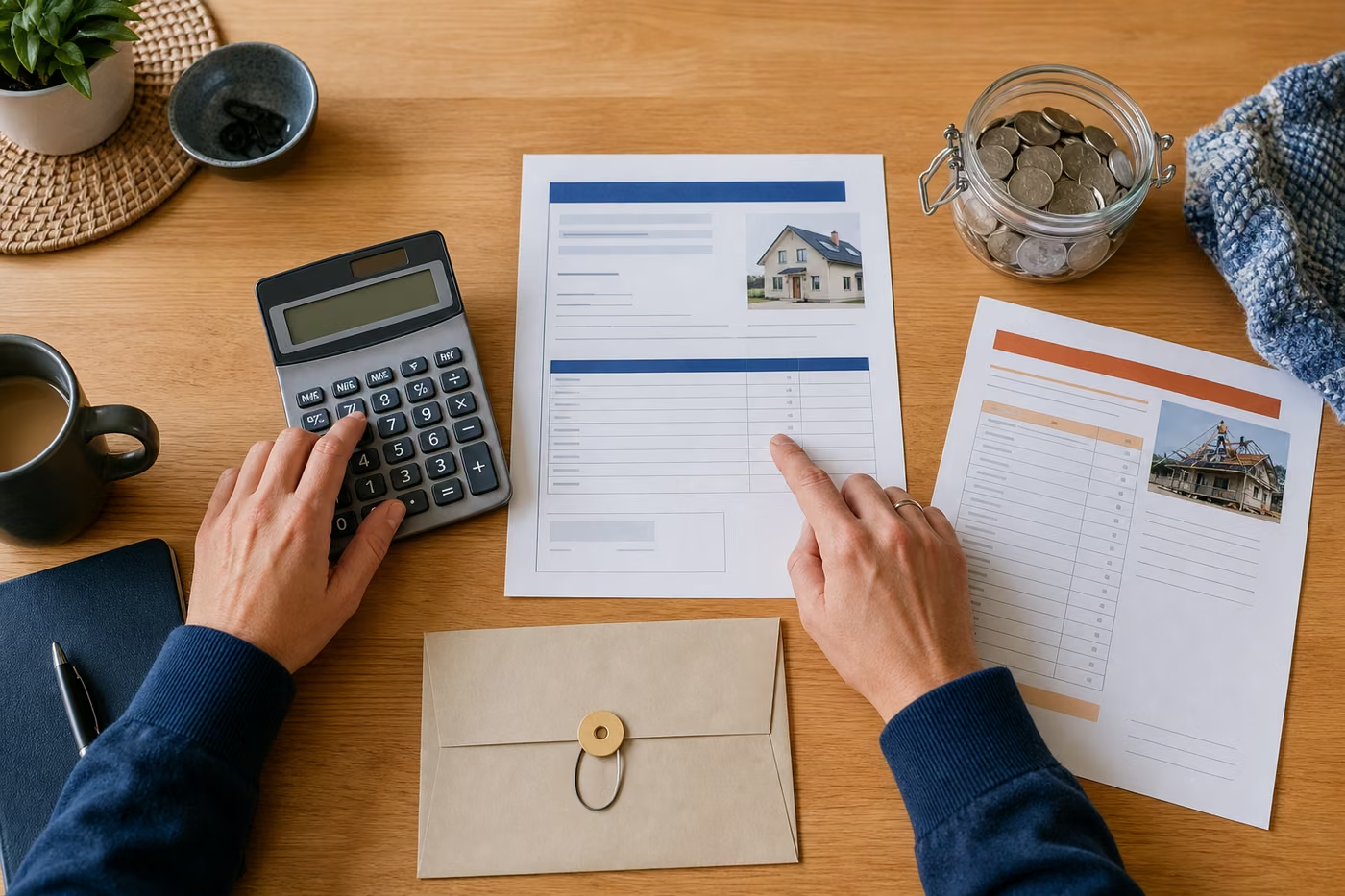
The economy can turn a quiet household problem into one small percentage. In June, Americans' personal saving rate fell to 2.7%. Spending still rose, income grew more slowly, and the money left after taxes and outlays became a little thinner.
What changed in June
BEA says personal income rose 0.2% and consumer spending rose 0.3%. Personal outlays increased by $70 billion, while personal saving stood at $646.1 billion. After accounting for prices, disposable income rose 0.3% and real consumer spending rose 0.4%.
Why the saving rate matters
The national rate is not a recommendation and it does not say every household saved 2.7% of a paycheck. It does say that, across the economy, the share left after spending was small. When the roof leaks, the car needs tires or an insurance deductible arrives, a thin reserve turns an ordinary problem into expensive debt.
Start with the bill that would hurt tomorrow
Look at the next 30 days, not an abstract retirement number. Add the mortgage or rent, utilities, food, transportation, insurance and minimum debt payments. Then ask how many weeks the liquid account could carry them if income paused. That answer is more useful than comparing yourself with a national average.
Build the cushion without pretending life stops
Move a small automatic amount just after payday, send windfalls to the reserve and keep home maintenance separate from everyday checking. If the budget is already tight, begin with one predictable shock—an insurance deductible, a tire set or one month of housing—and build from there.
The reader-first takeaway
June's report is not a reason to panic or stop living. It is a nudge to make the invisible buffer visible. Put a number beside it, choose the first milestone and protect it from purchases that can wait.