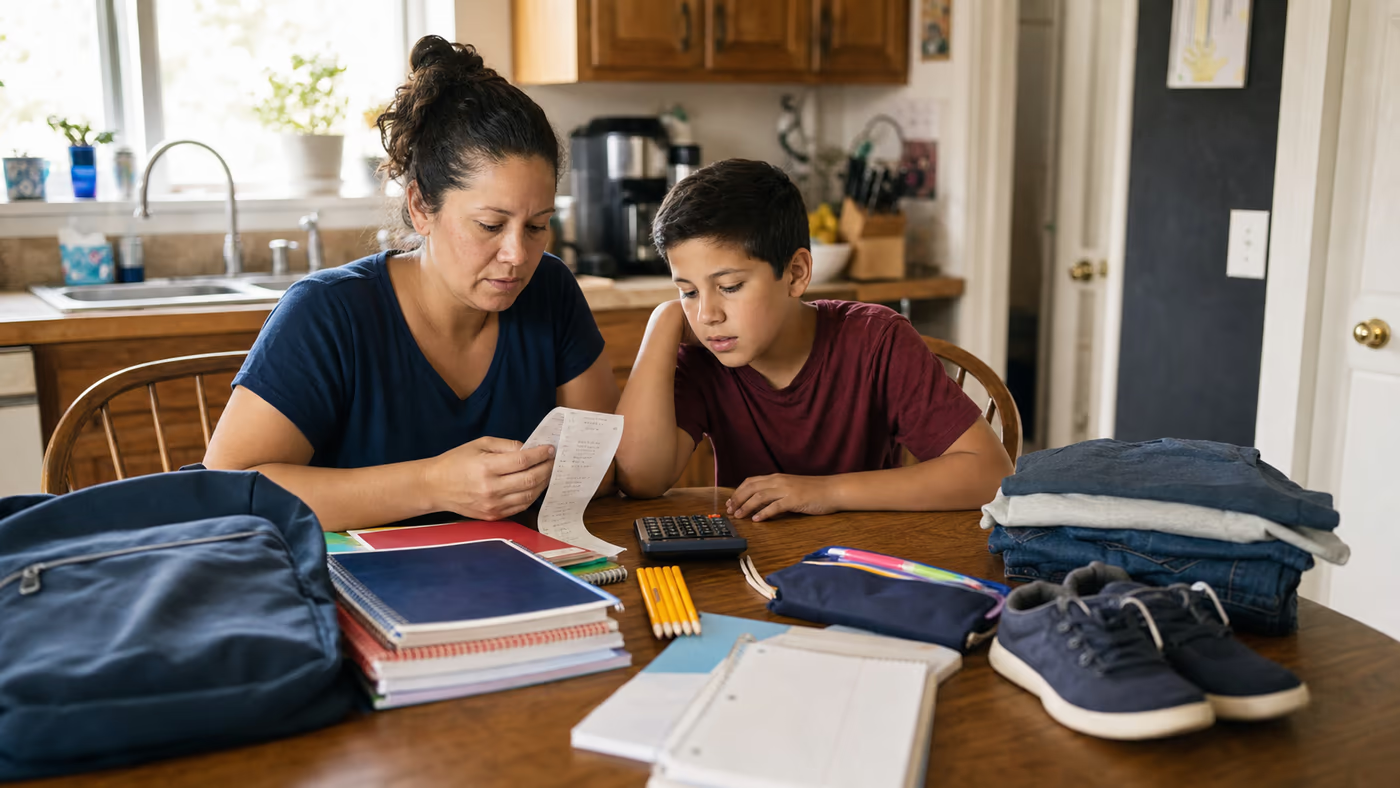
Illinois shoppers are about to see a rare back-to-school tax break, but the useful word is reduced—not free. The state's new 10-day holiday begins Friday, August 7, and ends at the close of business Sunday, August 16. It applies statewide to qualifying purchases from retailers registered in Illinois, including covered online sales to Illinois customers.
The tax does not fall to zero everywhere
Illinois is reducing the state portion of sales tax by five percentage points, from 6.25% to 1.25%. Local sales taxes are not erased by the holiday. The Department of Revenue gives an example: a location with a normal 9.75% combined rate would charge 4.75% on a qualifying purchase during the holiday. A location normally charging 6.50% would charge 1.50%. The exact checkout rate therefore depends on where the sale is sourced.
What qualifies
Clothing and footwear qualify when the retail selling price is less than $125 per item. The official list includes ordinary shirts, pants, dresses, coats, school uniforms, socks, sneakers, boots and similar wear. Student school supplies do not have the $125 ceiling; examples include binders, bookbags, calculators, crayons, folders, notebooks, paper, pencils, pens, rulers and scissors when used in a course of study.
What stays fully taxable
The holiday does not cover every back-to-school purchase. Illinois excludes computers and related supplies, flash drives, printers and ink, cameras, cell phones, textbooks and workbooks, reference books, maps and globes, and art supplies such as paints, brushes, sketch pads and clay. Clothing accessories, sports gear, protective equipment and any clothing item priced at $125 or more also stay at the ordinary rate.
A sale price can change the answer
For qualifying clothing, a store markdown or an unreimbursed coupon can bring the selling price below $125, while a reimbursed coupon is treated differently. A $140 pair of shoes cannot be split into two $70 shoes. A qualifying back-order counts when it is paid in full during the holiday even if delivery comes later; a rain check issued during the holiday does not preserve the reduced rate for a purchase completed after August 16.
Put the savings in dollars
The state reduction equals $5 for each $100 of qualifying purchases. A $200 basket of eligible items would therefore carry $10 less Illinois state tax than it would outside the holiday, before accounting for local tax. The math does not make an excluded laptop cheaper, and it should not turn an unplanned purchase into a saving.
Who should check the receipt
Illinois households buying school clothing or supplies, college students, teachers shopping for student-use materials and anyone ordering eligible goods for delivery to Illinois may be affected. Product classification, the per-item clothing threshold and the sale's tax location decide the result. Keep the itemized receipt, especially when one order mixes qualifying and excluded goods.
HomeCostGrid action
Build the list before the sale: mark each item as qualifying, excluded or uncertain; keep every clothing item below the $125 threshold if it fits the need; and compare the normal combined rate with the checkout rate. Use the Illinois Department of Revenue bulletin and Tax Rate Finder—not a retailer banner—to verify the rule and local rate. For wider household planning, open the HomeCostGrid Illinois state page and keep the purchase inside the back-to-school budget.