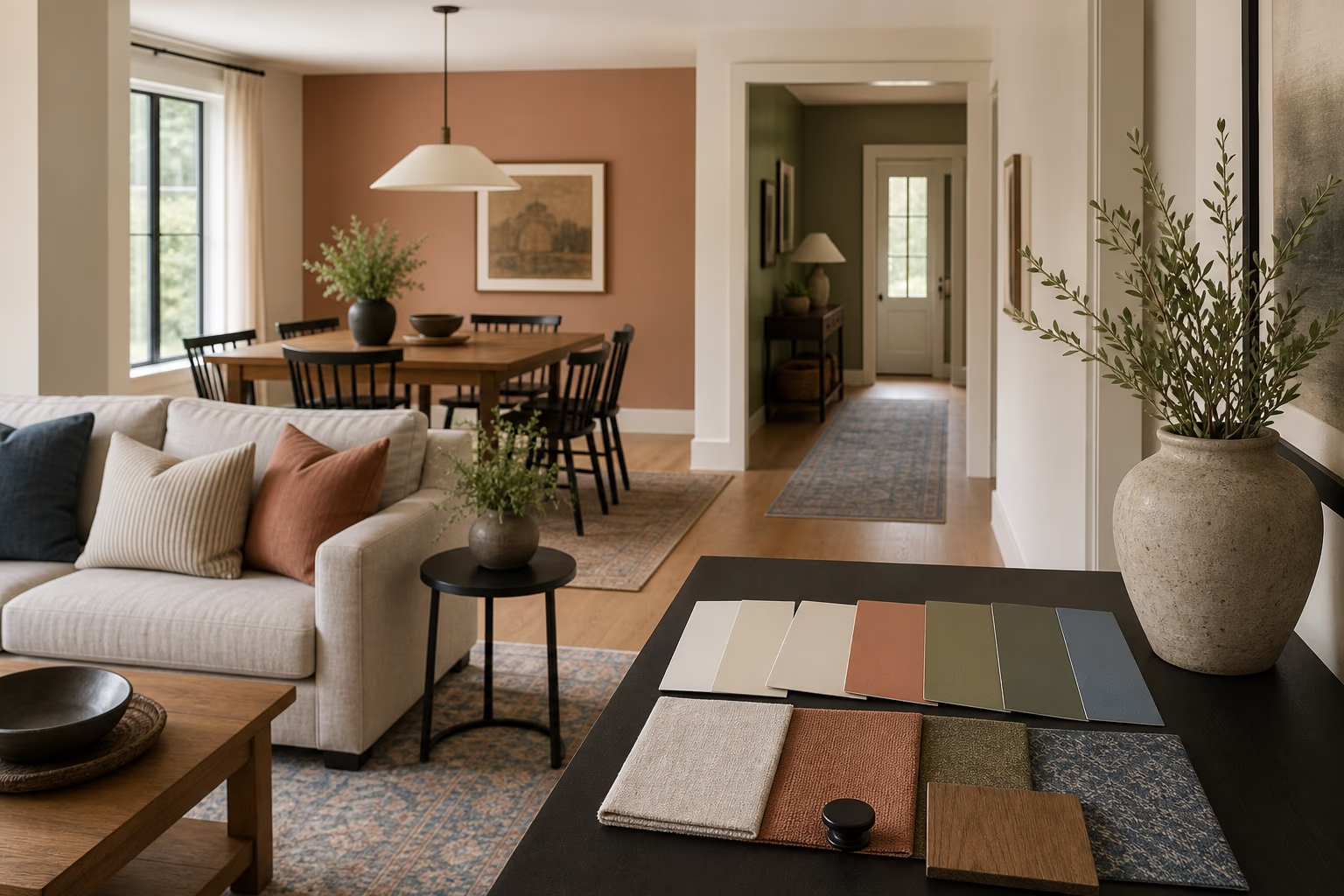
Select one consistent trim color, one main neutral, two supporting colors, and one small accent. Test each in morning and evening light before buying gallons.
Peel-and-stick or painted sample boards
DIY walls, prep, and supplies
Several rooms, depending on labor and repair
Planning ranges and scenarios are starting points, not quotes or promises. Replace them with current documents and property-specific evidence before spending money.
Start with what cannot easily change
Flooring, stone, tile, large upholstery, and kitchen cabinetry carry undertones that paint must work with. Place a white sheet of paper beside each finish to see whether it leans warm, cool, green, pink, or yellow.
Choose the main neutral only after you understand those fixed materials. The right neutral connects them; the wrong one makes every undertone more obvious.
- Compare samples against flooring
- Look at colors beside white
- Photograph samples at four times of day
Use a simple 60–30–10 rhythm
Think of roughly 60 percent as the quiet background, 30 percent as the supporting material or color, and 10 percent as the lively accent. It is a guide, not a measuring formula.
In an open plan, the neutral may span the walls while wood and upholstery form the supporting layer. The accent can move through pillows, art, ceramics, or a painted cabinet.
Give adjoining rooms a visual handshake
Rooms visible at the same time should share at least one color or material. A clay dining wall can connect to a clay pillow in the living room; an olive hall can echo the kitchen island.
Private rooms may be more distinct. Keep trim, door color, or flooring consistent so the house still feels related when the door opens.
Test before committing
Paint large sample boards and move them around the room. Wall samples alone can be misleading because one wall may receive warm sun while another stays blue and shaded.
Check color beside your lamps at night. Bulb temperature changes paint dramatically; most relaxed living spaces feel comfortable around warm 2700K to 3000K light.
Take this list with you.
Work from the evidence you already have, mark what is missing and verify the important assumptions before you commit.
- 01List every fixed finish
- 02Choose one trim color
- 03Shortlist one main neutral
- 04Add two supporting colors
- 05Pick one small accent
- 06Test in daylight and lamplight
A few things worth knowing before you start.
How many paint colors should a whole house have?
There is no fixed number, but one main neutral, two or three supporting colors, and consistent trim is enough for many homes. Repetition matters more than a strict count.
Should ceilings always be white?
No. A softer version of the wall color can feel cohesive, while a clean white can add contrast. Consider ceiling height, daylight, and the trim color.
Can warm and cool colors live together?
Yes. Balance them through repeated materials and a shared neutral. A warm wood floor can work beautifully with muted blue when both appear more than once.